
Palm Sunday 2026
Matthew 26:14-27:66
Christ was humbler yet, even to accepting death, death on a cross. But God raised him high and gave him the name which is above all names.
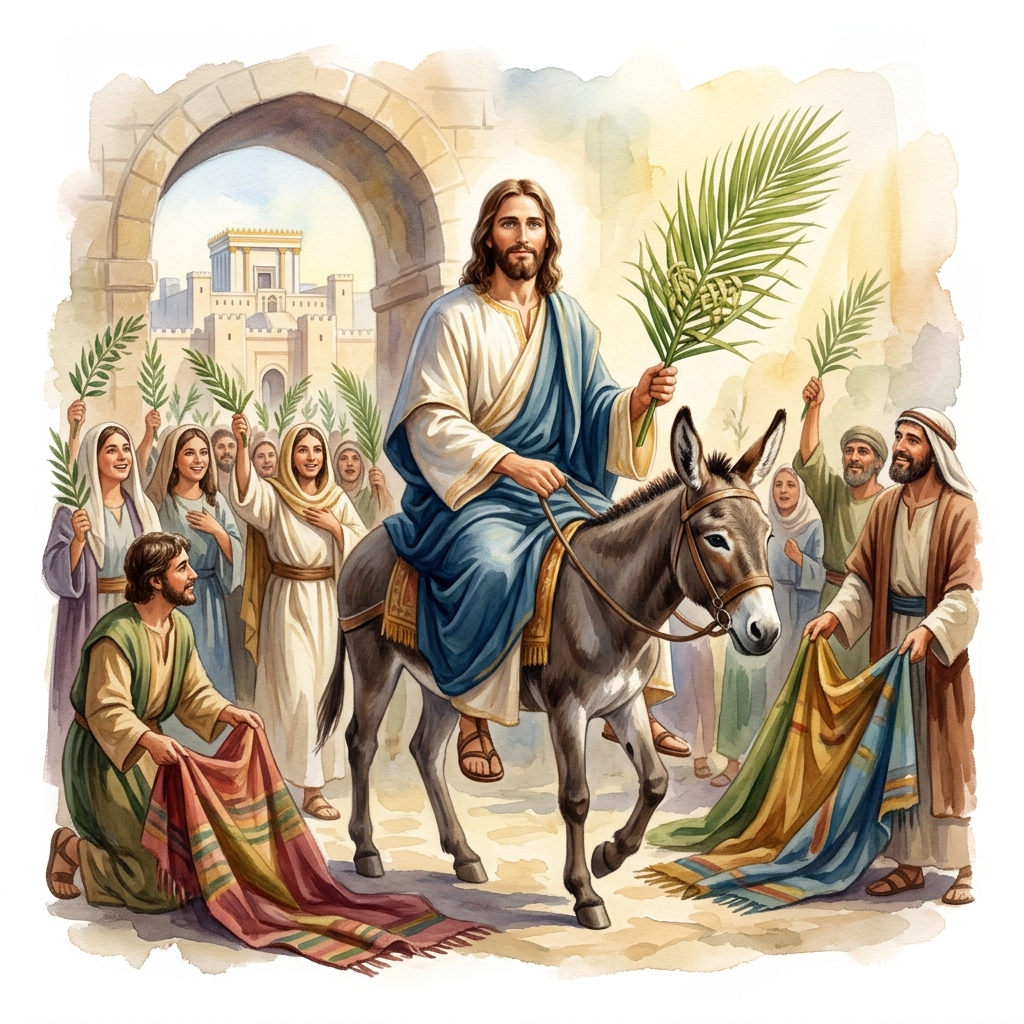
Two processions entered Jerusalem on a spring day in the year 30. One was a peasant procession, the other an imperial procession. From the east, Jesus rode a donkey down the Mount of Olives, cheered by his followers. Jesus was from the peasant village of Nazareth, his message was about the kingdom of God, and his followers came from the peasant class. On the opposite side of the city, from the west, Pontius Pilate, the Roman governor of Idumea, Judea and Samaria, entered Jerusalem at the head of a column of imperial cavalry and soldiers. Jesus’s procession proclaimed the kingdom of God; Pilate’s proclaimed the power of empire. The two processions embody the central conflict of the week that led to Jesus’s crucifixion. Jesus’s procession deliberately countered what was happening on the other side of the city. Pilate’s procession embodied the power, glory and violence of the empire that ruled the world. Jesus’ procession embodied an alternative vision, the Kingdom of God. The king, riding on a donkey, will banish war from the land – no more chariots, warhorses or bows. Commanding peace to the nations, Jesus will be a king of peace. It was the standard practice of the Roman governors of Judea to be in Jerusalem for the Jewish festivals to be in the city in case there was trouble. The mission of the troops with Pilate was to reinforce the Roman garrison permanently stationed in the Fortress Antonia, overlooking the Jewish Temple and its courts. No wonder, the Roman governor realised how the peasant procession was a threat to his government and, hence, its leader should be exterminated.
Fr Antony Kadavil Intercom March 2026